
How Long Does It Take for a Tattoo to Heal? The Complete 2026 Guide
Category: Tattoo Aftercare & Skin Health | Reading time: ~9 min
On average, the surface layer (epidermis) of a new tattoo takes 2 to 4 weeks to close and appear visually healed. Full biological recovery of the deeper dermis layer — the permanent home of the ink — takes 3 to 6 months. The exact timeline depends on three main factors: the tattoo’s size and ink density, its placement on the body, and the quality of your daily aftercare routine.
You just got a new tattoo. The lines look sharp, the ink is vivid, and you’re already thinking about your next one. But now comes the part nobody explains well enough: the healing process. So, how long does a tattoo take to heal? The short answer is 2 to 4 weeks for the surface — but the full story is more involved than that.
A lot of people assume a tattoo is done healing once the surface skin stops being sore and red. That’s only the first half of the story. Your skin goes through four distinct biological stages after getting tattooed — and understanding all of them is the difference between ink that stays crisp for decades and ink that fades, blurs, or gets infected before it ever has a chance to settle.
This guide covers everything: the full healing timeline week by week, the factors that speed it up or slow it down, what normal healing looks like versus red flags, and the aftercare steps that actually matter — backed by guidance from the American Academy of Dermatology (AAD).
Key Factors That Influence How Long Does a Tattoo Take to Heal
The standard healing window is 2 to 4 weeks for the surface and 3 to 6 months for full recovery. But no two tattoos heal identically. Several variables push your timeline in one direction or the other.
1. Tattoo Placement and Body Movement
Where your tattoo sits on your body is probably the single biggest external factor in how fast it heals.
- High-mobility zones: Tattoos near joints — elbows, knees, armpits, knuckles — are under constant mechanical stress. Every time you bend or flex, the healing skin stretches. This causes micro-tears in developing scabs, extends the inflammatory phase, and increases the risk of ink fallout.
- Low-friction areas: Tattoos on the outer thigh, upper arm, or upper back heal more predictably. Less daily friction from clothing and movement means the body can focus on cellular repair without constant interruption.
- Extremities: Hands, feet, and ankles have lower blood circulation and are prone to swelling, both of which slow healing. These areas also experience more friction from footwear and daily activity, making them the most common candidates for touch-ups.
2. Tattoo Size and Ink Density
The amount of skin trauma directly correlates with how long your body needs to repair it.
- Fine-line and minimalist designs: Less needle penetration, less surface area disrupted. These often reach surface-level healing in as little as 10 to 14 days.
- Heavy blackwork, shading, and color packing: Dense designs require the needle to pass over the same skin multiple times. More trauma means more swelling, thicker scabbing, and a longer inflammatory phase — often the full 4-week window before the surface closes.
3. Your Overall Health and Immune System
Healing a tattoo is fundamentally an internal biological process. Your body’s condition is the engine that drives recovery.
- Hydration: Water transports nutrients to skin cells. Well-hydrated skin forms new epidermis more efficiently. Dehydrated skin becomes brittle and prone to cracking, which invites bacteria and delays healing.
- Blood circulation: Areas with strong blood flow (chest, torso) receive more oxygen and white blood cells, speeding repair. Extremities with lower circulation heal more slowly.
- Immune health: Illness, high stress, poor sleep, and nutritional deficiencies all suppress the immune response your skin needs to heal properly.
The 4 Biological Stages of Tattoo Healing
Your body treats a new tattoo as a medical wound. The immune system goes into repair mode immediately, following a precise biological sequence — and understanding each stage helps you know what to expect and what to do.
Stage 1: The Inflammatory Phase (Days 1–5)
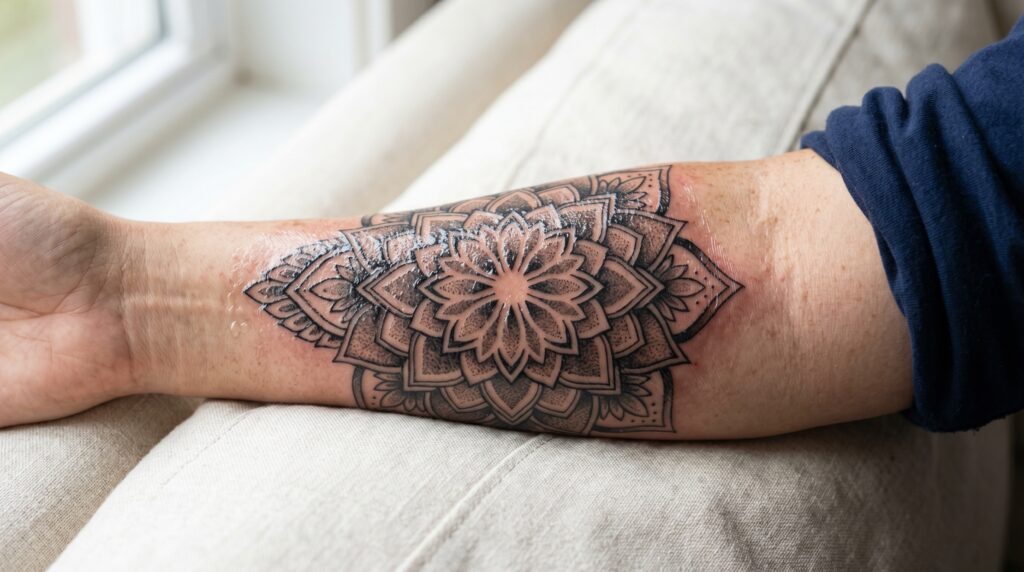
The moment the needle leaves your skin, your body launches an acute inflammatory response. This is the most delicate phase.
- What’s happening: Your immune system floods the area with white blood cells to prevent infection. You’ll notice weeping — a mixture of plasma, trace blood, and excess pigment oozing from the surface. This is your body’s natural flushing response as the wound begins to seal.
- What you feel: Warmth, swelling, and tenderness in and around the tattoo — similar to a moderate sunburn.
- What to do: Keep the area clean and protected. This is when the risk of bacterial infection is highest, and any contamination now can significantly extend the overall healing timeline.
Stage 2: The Regeneration and Peeling Phase (Days 6–14)
The weeping stops and regeneration begins. This is the stage that surprises — and worries — most first-timers.
- What’s happening: Your body grows a new layer of epidermis to close the wound. As the old, damaged skin cells die off, they form thin scabs that begin to flake and peel away. The tattoo may look patchy or discolored during this process.
- The itching: Intense and sometimes maddening itching is normal here — it’s the nerves in your skin reacting to the regeneration happening beneath them.
- The golden rule: Never pick, peel, or scratch. Pulling a scab off prematurely can pull ink out of the dermis, creating permanent gaps — called “holidays” — in the tattoo. These require a paid touch-up to fix.
Stage 3: The Silver Skin Phase (Days 15–30)
The heavy peeling and intense itching subside, but the tattoo enters a deceptive phase. It may look dull, hazy, or cloudy — and this is completely normal.
- What’s happening: Your body is forming a protective new layer of skin cells. Because this layer is still maturing, it isn’t yet fully transparent — this is what gives the tattoo that milky or frosted-glass appearance sometimes called “silver skin” or “onion skin.”
- What people worry about: Many people think they’re losing ink during this stage. The ink is exactly where it should be, sitting in the dermis. It’s simply obscured by the healing layer above it.
- Key action: Don’t stop moisturizing. Even though the surface feels closed, the deeper tissue is still thirsty. Keeping the skin supple prevents the new layer from becoming brittle or cracking.
Stage 4: Full Maturation and Stabilization (Months 2–6)
This is the final — and mostly invisible — phase of healing. While your tattoo looks great after 30 days, the internal biological work continues for months.
- What’s happening: Your immune system encapsulates the ink particles into the collagen fibers of the dermis, locking the pigment into its permanent home. Until this stabilization is complete, the ink is technically still settling.
- What you feel: Nothing. No pain, no itching. But the structural integrity of your skin is still being rebuilt at a microscopic level. This is when the tattoo truly becomes a permanent part of your body.
- The UV threat: This phase is when sun protection matters most. Because the ink hasn’t fully locked into the dermis, UV exposure can break down the chemical bonds of the pigment, causing premature blurring and fading. Apply SPF 30+ sunscreen every time the tattoo is exposed.
| Stage / Timeframe | What’s Happening |
|---|---|
| Stage 1 — Days 1–5 | Inflammation, weeping, immune response begins |
| Stage 2 — Days 6–14 | Peeling, flaking, itching, new epidermis forming |
| Stage 3 — Days 15–30 | Silver skin phase, cloudy appearance, surface closes |
| Stage 4 — Months 2–6 | Deep dermis stabilizes, ink locks in, invisible healing |
Critical Safety: When Healing Goes Wrong
Understanding the healing timeline isn’t just about aesthetics — it’s about keeping your body safe. Ignoring the stages can lead to serious complications.
The Risk of Open Water
A 2017 case published in BMJ Case Reports documented a 31-year-old man who swam in the Gulf of Mexico just five days after getting a leg tattoo. Because the skin barrier was still open in Stage 1, he contracted Vibrio vulnificus — a rare, aggressive bacteria found in warm seawater. The case is cited in medical literature as a reminder that even when a tattoo looks sealed, microscopic pores remain a pathway for life-threatening pathogens for at least three weeks.
| The Rule on SwimmingNo swimming — pool, ocean, or lake — for a minimum of 3 weeks after getting a tattoo. Chlorine, salt water, and fresh-water bacteria can all cause infection and ink loss. When the surface has fully closed (usually by week 3), short swims become lower risk, but the tattoo is still healing internally for months. Source: BMJ Case Reports 2017 (bcr-2017-220083) |
Tattoos and Pregnancy
The American Pregnancy Association and most dermatologists advise against getting a tattoo while pregnant or breastfeeding. The risks include:
- Systemic stress: The pain of tattooing triggers a spike in adrenaline and cortisol. In a pregnant body, this stress response can affect fetal heart rate.
- Infection risk: Even in a sterile shop, any blood-borne infection risk carries extreme consequences for a developing immune system.
- Hormonal skin changes: Pregnancy hormones alter skin elasticity and pigmentation. A tattoo placed during pregnancy may permanently distort as the body returns to its pre-pregnancy state.
Infection Red Flags — See a Doctor If You Notice These
Some redness and swelling in the first three days is normal. The following signs indicate something has gone wrong:
- Spreading redness: Red streaks moving away from the tattoo site, especially toward the heart.
- Green or yellow pus: Distinct from the clear plasma of Stage 1. Thick, colored discharge is a sign of bacterial infection.
- Fever or chills: A systemic temperature response means the infection may have entered the bloodstream.
- Worsening pain after day 3: Pain should decrease over time, not increase. Pain that intensifies after 72 hours is a warning sign.
- Raised, scaly patches or hives: May indicate an allergic reaction to the ink, particularly red or yellow pigments.
If you experience any of the above, contact a board-certified dermatologist promptly. Find one at find-a-derm.aad.org.
The Aftercare Protocol That Actually Makes a Difference
Most tattoo quality issues come down to the same handful of aftercare mistakes. Here is what the dermatology community consistently recommends, aligned with AAD guidelines.
The First 24 Hours: Protect the Wound
- Medical-grade wrap (Saniderm / Tegaderm): Leave in place for 3 to 5 days as instructed by your artist. These breathable barriers use your body’s natural plasma to accelerate Stage 1 healing without exposing the wound to air-borne bacteria.
- Traditional plastic wrap: Remove within 2 to 4 hours. Do not re-wrap — the tattoo needs oxygen to begin regeneration.
Cleaning: Gentle, Fragrance-Free, and Consistent
- Wash once or twice daily with a mild, fragrance-free liquid soap and lukewarm water.
- Hands first: Always wash your hands thoroughly before touching the tattoo.
- No washcloths or loofahs: These harbor bacteria and are too abrasive for healing skin. Use clean fingertips only.
- No antibacterial soaps: According to the AAD, these are too harsh and can damage the healing epidermis.
- Pat dry: Use a clean, disposable paper towel. Never rub.
Moisturizing: The Less-Is-More Rule
- Days 1–3 (Ointment): Apply a very thin layer of an alcohol-free healing ointment such as Aquaphor. The tattoo should look slightly shiny, not greasy. Over-moisturizing leads to clogged pores and can pull ink out of the dermis.
- Days 4–30 (Lotion): Switch to a fragrance-free, dye-free lotion. Apply 2 to 3 times per day, or whenever the skin feels tight or dry. Dermatologist-recommended options include Lubriderm, CeraVe, and Cetaphil (all unscented).
- Avoid petroleum jelly (Vaseline): It is non-breathable and can trap heat and bacteria against the wound, per the AAD.
Lifestyle Restrictions During Healing
- No submerging in water: No baths, pools, hot tubs, or ocean swimming for at least 3 weeks.
- No direct sunlight: Keep the tattoo covered with loose clothing. Do not apply sunscreen until the surface skin has fully closed (around Day 14–21).
- No tight clothing: Restrictive or synthetic fabrics that rub against the tattoo can cause premature peeling and ink loss.
- Limit heavy exercise: Avoid intense workouts for 48 to 72 hours. Excessive sweating irritates the open wound. If the tattoo is on a joint or high-movement area, avoid straining that area for at least 2 weeks.
Tattoo Aftercare: The Do’s and Don’ts at a Glance
| Category | Timeline | DO This | AVOID This |
|---|---|---|---|
| Wrapping | Days 1–3 | Keep wrap on as instructed by your artist | Removing medical wrap too early |
| Cleaning | Days 1–30 | Fragrance-free soap, lukewarm water, fingertips only | Washcloths, loofahs, antibacterial soaps |
| Drying | Days 1–30 | Pat dry with disposable paper towel | Rubbing with a bath towel |
| Moisturizing | Days 1–30 | Thin layer of fragrance-free lotion, 2–3x daily | Vaseline, petroleum jelly, or over-moisturizing |
| Itching | Weeks 1–3 | Let skin flake off naturally; gently pat the area | Picking, scratching, or peeling scabs |
| Water | Weeks 1–3 | Quick showers are fine — keep brief | Baths, pools, hot tubs, oceans for at least 3 weeks |
| Sunlight | Months 1–6 | Cover with loose clothing while healing; SPF 30+ after | Direct sun, tanning beds on healing skin |
| Clothing | Weeks 1–4 | Loose cotton — breathable, non-abrasive | Tight gym gear, wool, or synthetic fabrics that rub |
Healing Times by Tattoo Placement
Not all placement areas heal at the same rate. Here is a general guide based on skin thickness, movement, blood circulation, and friction exposure.
| Placement | Surface Heal | Notes |
|---|---|---|
| Upper arm / thigh | 2–3 weeks | Fleshy, low friction — one of the easiest areas to heal well |
| Forearm | 2–3 weeks | Moderate sun exposure; generally heals reliably |
| Chest / torso | 2–3 weeks | High blood flow speeds healing; movement from breathing can slow it slightly |
| Back | 3–4 weeks | Large surface area; clothing friction is the main variable to manage |
| Ribs | 3–4 weeks | Skin stretches with every breath; prone to cracking during peeling phase |
| Inner elbow / knee | 3–5 weeks | High-movement joint; skin in the crease is prone to splitting during healing |
| Neck / behind ear | 2–3 weeks | Thin skin but usually heals quickly if kept clean and dry |
| Hands / fingers | 4–6 weeks | High friction and constant movement; fading and patchy healing are common — touch-ups often needed |
| Feet / ankles | 4–6 weeks | Pressure from footwear, swelling, and low circulation all slow healing significantly |
Frequently Asked Questions
Q: When can I stop putting lotion on my tattoo?
Continue applying a fragrance-free moisturizer for at least 3 to 4 weeks. Even after the visible peeling stops, the deeper skin layers are still maturing. Once the silver skin phase is complete and your skin feels smooth and natural to the touch, you can return to your regular skincare routine. SPF protection, however, should continue indefinitely when the tattoo is exposed to sun.
Q: Why does my tattoo look faded or cloudy in the second week?
This is the silver skin phase — a normal part of the healing timeline. As a new protective layer of skin forms over the ink, it acts like a frosted window, making colors look dull or milky. Once the skin matures (usually by day 30), the vibrant colors return. If the tattoo still looks dull at 3 months, consult your artist about a touch-up.
Q: Can I go to the gym while my tattoo is healing?
Light walking is fine from day one. Avoid intense exercise for 48 to 72 hours — excessive sweating irritates an open wound and introduces bacteria. If the tattoo is on or near a joint, avoid exercises that stretch or strain that area for at least 2 weeks to prevent scab cracking and ink loss.
Q: How long after a tattoo can I swim?
Wait a minimum of 3 weeks before swimming in any body of water. Chlorine, salt water, and bacteria in natural water sources can all cause infection and strip ink from the healing dermis. Even after the surface closes, the deeper tissue is still vulnerable — when in doubt, wait the full 4 weeks.
Q: Is peeling normal, and will it take the color with it?
Peeling is completely normal and expected. The skin that sheds is the surface epidermis — the ink lives in the dermis below and is not being lost. The tattoo will look patchy during this phase, but the color returns once the new skin matures. The only time color is genuinely lost is if you pick or pull the skin yourself, pulling ink from the dermis in the process.
Q: How do I know if my tattoo is infected versus just healing normally?
Normal healing involves mild redness and swelling in the first 3 days, followed by itching, peeling, and a cloudy appearance as new skin forms. Infection looks different: redness that spreads or worsens after day 3, thick green or yellow discharge, fever, chills, or pain that intensifies rather than subsides. Any of these warrant a same-day call to a doctor.
Q: Does a bigger tattoo take longer to heal?
The surface healing timeline (2–4 weeks) is roughly similar regardless of size. What changes is how much systemic stress your body manages — a large, dense back piece involves far more skin trauma than a small wrist design. Larger tattoos may feel sore for longer and typically take the full 6 months for complete deep-tissue stabilization.
Conclusion: Healing Is Part of the Tattoo
So, how long does it take for a tattoo to heal? The surface: 2 to 4 weeks. The full biological picture: 3 to 6 months. But the good news is that the rules are simple.
Keep it clean with a gentle, fragrance-free soap. Moisturize with a thin layer of unscented lotion. Protect it from the sun. Stay out of water for 3 weeks. And resist every urge to pick or scratch — that one rule alone will protect the quality of your tattoo more than anything else.
If anything looks wrong — spreading redness, worsening pain, fever, or unusual discharge — don’t wait. See a board-certified dermatologist. Find one at find-a-derm.aad.org.
Your tattoo is a long-term investment. The healing phase is the foundation it’s built on.
📚 Citations & Sources
All medical and aftercare claims in this article are supported by board-certified dermatology guidance and peer-reviewed medical research:
- American Academy of Dermatology (AAD) — Caring for Tattooed Skin
📌 Source: AAD — aad.org/public/everyday-care/skin-care-basics/tattoos/caring-for-tattooed-skin - American Academy of Dermatology (AAD) — Tattoos: 7 Unexpected Skin Reactions
📌 Source: AAD — aad.org/public/everyday-care/skin-care-basics/tattoos/tattoo-skin-reactions - British Medical Journal Case Reports (2017) — Vibrio vulnificus infection after tattoo in open water
📌 Source: BMJ Case Reports — casereports.bmj.com/content/2017/bcr-2017-220083 - American Pregnancy Association — Tattoos During Pregnancy
📌 Source: APA — americanpregnancy.org/healthy-pregnancy/is-it-safe/tattoos-during-pregnancy - National Institutes of Health (NIH) — Wound Healing and Skin Repair
📌 Source: NIH PubMed Central — ncbi.nlm.nih.gov/pmc/articles/PMC3000018