
How Much Does a Tattoo Cost? Complete 2026 US Pricing Guide
Category: Tattoo Pricing & Culture | Reading time: ~9 min
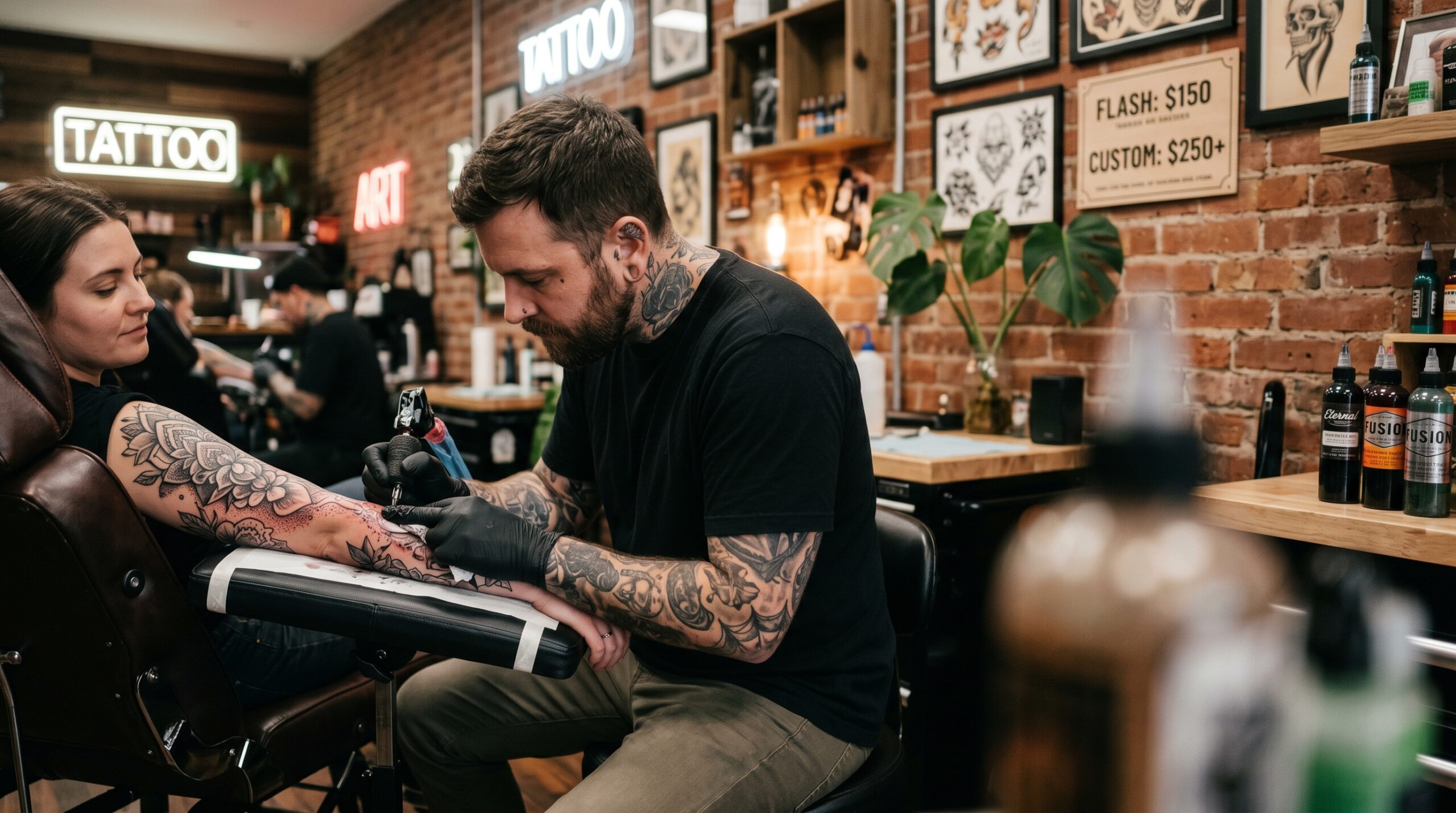
How much does a tattoo cost? In the United States, a tattoo costs anywhere from $50 for a tiny flash design to $10,000+ for a full sleeve. Most studios charge a minimum shop fee of $50–$100 regardless of tattoo size. The national average for a small-to-medium tattoo is $150–$450. Custom work from experienced artists runs $150–$250 per hour, and a full-day session can run $800–$2,000. The biggest drivers of price are the artist’s experience level, the studio’s location, the size and complexity of the design, and whether the work is custom or flash.
So, how much does a tattoo cost in 2026? Getting a tattoo is one of those purchases where walking in without a number in your head is a fast way to either overpay or — worse — end up at the cheapest shop in town regretting it for the rest of your life.
Tattoo pricing in the US is genuinely all over the map. A small wrist tattoo from a new artist at a local studio might cost $80. The same design from a sought-after artist in New York or Los Angeles could cost $400. Neither price is necessarily wrong — they reflect different things. Understanding what you’re actually paying for makes all the difference.
This guide gives you every number you need — by size, by placement, by style, by city — and explains exactly what drives the price up or down so you can budget accurately and make a smart decision.
How Tattoo Studios Actually Charge: The Two Pricing Models
Before getting into specific numbers, you need to understand the two ways studios set their prices — because the model matters for how you budget.
| Pricing Model | How It Works | Best For |
|---|---|---|
| Hourly Rate | You’re charged a set amount per hour of tattooing time. Most custom work is priced this way. Rates typically run $100–$300/hour nationally, with top artists charging $250–$500+/hour. | Medium to large custom pieces where time is hard to predict in advance. |
| Flat / Piece Rate | The artist quotes you a fixed price for the entire piece, regardless of how long it takes. Common for smaller designs, flash tattoos, and simple text. | Small tattoos, flash designs, simple lettering, and anything with a predictable scope. |
| Minimum Shop Fee | A baseline charge — usually $50–$100 — that applies to any tattoo regardless of size. Covers setup, sterilisation, ink, and the artist’s time even for the smallest designs. | Any tattoo. You pay at least this much even for a 5-minute job. |
| What Is a ‘Flash’ Tattoo?Flash tattoos are pre-designed artwork displayed in the studio or online that the artist has ready to tattoo as-is. Because the design is already done and the artist knows exactly how long it takes, flash pieces are usually priced flat — often cheaper than equivalent custom work. Flash tattoos are a great way to get quality work at a lower price if you’re flexible on design. Most studios run periodic flash events where specific designs are offered at a fixed, often discounted rate for one day only. |
Tattoo Cost by Size — From Tiny to Full Sleeve
Size is the most reliable predictor of overall cost. Here are the real-world ranges for each size category in the US in 2026:
| Size | Example | Typical Price Range | Time on Skin |
|---|---|---|---|
| Tiny / Micro | Single word, small symbol, dot-work | $50–$150 (minimum fee applies) | 15–30 min |
| Small | Playing card size, simple outline, small portrait | $150–$350 | 30 min–1.5 hrs |
| Medium | Postcard-sized, moderate detail | $300–$600 | 1.5–3 hrs |
| Large | Hand-sized, complex design, solid shading | $500–$1,200 | 3–6 hrs |
| Extra Large | Chest piece, calf wrap, large back section | $1,000–$2,500 | Full day session |
| Half Sleeve | Elbow to wrist or shoulder to elbow | $1,500–$4,000 | Multiple sessions |
| Full Sleeve | Shoulder to wrist, full arm | $3,000–$8,000+ | Multiple sessions over months |
| Full Back Piece | Shoulder blades to lower back | $4,000–$10,000+ | Multiple long sessions |
| Why Can’t Artists Just Give Me a Price Over the Phone?This is one of the most common frustrations first-timers have — and the reason is legitimate. An artist needs to see the actual design, know exactly where on your body it’s going, assess your skin tone, and understand the level of detail you want before giving an accurate quote. Reference photos are essential. The more specific you can be about size, placement, style, and reference images, the more accurate your quote will be. A “medium floral piece” could take 2 hours or 8 depending on the details. Most studios offer free or low-cost consultations. Use them. |
Tattoo Cost by Placement — Which Body Parts Cost More?
Placement affects price in two ways: how technically difficult it is to tattoo (curved surfaces, thin skin, high-movement areas) and how long it takes. Here’s what to expect for specific body locations:
| Placement | Typical Price Range | Why the Price Varies |
|---|---|---|
| Wrist / inner wrist | $100–$300 | Small surface, quick session. Pain and fading risk are higher. |
| Forearm (outer) | $200–$600 | Excellent canvas — flat, consistent skin. Easy to work on, heals well. |
| Upper arm / bicep | $200–$600 | Another reliable canvas. Curved surface adds slight complexity for wrapping designs. |
| Chest | $300–$1,500 | Size varies enormously. Smaller sternum pieces to full chest panels. |
| Rib cage | $300–$900 | Painful to tattoo. Skin moves with breathing — takes longer to complete. |
| Back (upper/lower) | $300–$1,000+ | Large flat canvas — per session cost is lower but total pieces often multi-session. |
| Full back piece | $4,000–$10,000+ | One of the most complex and time-intensive placements. Multiple long sessions. |
| Thigh | $350–$850 | Large, fleshy canvas. Less pain, relatively easy healing. |
| Calf / shin | $300–$800 | Curved surface. Shin is more painful than calf. |
| Hand / fingers | $200–$600 | High-touch area. Fades quickly — most artists expect touch-ups, often included. |
| Neck / throat | $250–$700 | Sensitive area, visible location. Many artists charge a premium. |
| Behind the ear | $100–$300 | Small and quick but technically fiddly. |
| Spine | $200–$800 | Narrow, painful canvas. Linear designs are most common. |
| Foot / ankle | $150–$400 | High fading risk. Touch-ups are common and sometimes charged separately. |
Tattoo Cost by Style — Some Styles Cost More to Execute
The visual style of your tattoo significantly affects how long it takes and therefore how much it costs. Here’s how the most popular styles stack up:
| Style | Relative Cost | Why |
|---|---|---|
| Fine line / minimalist | $ Lower | Less needle time, less ink. Faster to execute. |
| Traditional / old school | $$ Mid-range | Bold lines and solid fills are efficient — less blending. |
| Neo-traditional | $$ Mid-range | More detail than traditional but still structured. |
| Blackwork / tribal | $$ Mid-range | Solid fills and patterns take consistent time. |
| Realism / portrait | $$$ High | Extremely detail-intensive. Requires the most skill and time. |
| Watercolor | $$$ High | Complex blending, large colour fields — slow and skill-demanding. |
| Japanese / Irezumi | $$$ High | Traditional large-scale pieces with intricate background work. |
| Geometric / dot-work | $$ Mid-range | Precision-intensive but steady rhythm — time varies widely. |
The 6 Factors That Drive Tattoo Prices Up or Down
1. The Artist’s Experience and Reputation
This is the biggest pricing variable. An apprentice artist working under supervision might charge $80–$120/hour. A mid-career artist with a solid portfolio typically charges $150–$200/hour. An artist with a significant following, a years-long waiting list, or recognition in the industry commands $250–$500+/hour. You’re not just paying for the time — you’re paying for the years of practice that make the result worth having permanently on your body.
2. Studio Location
Geography has a dramatic effect on tattoo pricing. Here’s a rough regional breakdown for hourly rates in the US:
| Location | Typical Hourly Rate Range |
|---|---|
| New York City, Los Angeles, San Francisco | $200–$400+/hour |
| Chicago, Boston, Seattle, Miami | $175–$300/hour |
| Mid-size cities (Austin, Denver, Nashville) | $150–$250/hour |
| Small cities and rural areas | $100–$175/hour |
3. Custom vs. Flash Design
Custom work — where an artist creates a design specifically for you — requires design time on top of tattooing time. Many artists charge a design deposit ($50–$200) that is typically applied toward the final cost. Flash designs skip the custom work entirely, which is one reason they’re priced lower.
4. Color vs. Black and Grey
Color tattoos typically cost more than equivalent black and grey work. Multiple colors require multiple ink changes, more passes over the same skin, and more total time in the chair. Vibrant, saturated color pieces also tend to need more frequent touch-ups over time.
5. Skin Tone and Skin Condition
Artists working on darker skin tones or skin with significant texture, scarring, or stretch marks take longer because the application requires more precision and often more passes. Some artists factor this into their pricing; others don’t — ask during your consultation.
6. Studio Overhead and Prestige
A studio in a high-rent location with premium equipment, top hygiene standards, and a curated artist roster has higher overhead — and prices reflect it. A studio charging $200/hour for a well-known artist in a clean, professional environment is often a better investment than a $100/hour shop where corners are being cut.
How Much Should You Tip Your Tattoo Artist?
Tipping your tattoo artist is standard practice in the US — it’s not mandatory but it’s very much expected and appreciated, especially for custom work. Here’s the general guidance:
| Scenario | Recommended Tip | Notes |
|---|---|---|
| Standard session | 15–20% of total cost | The baseline — same as tipping a restaurant server. |
| Excellent custom work | 20–25% | Artist went above and beyond on design and execution. |
| Long session ($500+) | 15–20% (minimum $50–$100) | Percentage stays the same — absolute amount grows. |
| Flash / walk-in | $20–$50 flat | For very small or cheap pieces where % feels low. |
| Touch-up (free) | $20–$50 minimum | Always tip on free touch-ups. The artist’s time still has value. |
| Unhappy with result | Still tip, then discuss | Don’t withhold a tip to signal dissatisfaction — have a conversation instead. |
| Why Tipping Tattoo Artists MattersUnlike many professional services, tattoo artists at most studios don’t keep 100% of what you pay. Studios typically take a commission — often 40–60% of the session rate — for booth rent, supplies, utilities, and overhead. What’s left is the artist’s income before taxes. Tipping goes directly to the artist, in full. For many tattooers — especially newer artists building their clientele — tips make a meaningful difference to their actual take-home pay. Cash tips are always preferred. Card tips are appreciated but may have processing fees depending on the studio’s setup. |
How to Get a Good Tattoo Without Overpaying
Being smart about cost doesn’t mean going cheap — it means being strategic. Here’s what actually works:
- Book flash events: Studios regularly hold flash days where pre-drawn designs are offered at fixed, lower prices. Follow your favourite local studios and artists on Instagram to catch these.
- Be flexible on timing: Many artists offer slightly lower rates for midweek bookings, last-minute cancellation slots, or off-peak months (January and February are typically the slowest).
- Batch your work: If you want multiple tattoos, booking them in one longer session is often more cost-effective per hour than separate shorter appointments, since setup and admin time only happens once.
- Choose placement wisely: Some placements heal better and need fewer touch-ups than others. A tattoo on your outer forearm will look better longer than the same design on your hand or finger, where fading is almost guaranteed.
- Research before booking: Spending time finding the right artist for your specific style — rather than booking whoever is available — almost always saves money in the long run. A tattoo that needs reworking or covering up costs far more than doing it right the first time.
- Never choose an artist based on price alone: The single most expensive tattoo decision you can make is going cheap and ending up with work that needs to be laser-removed or covered. Removal costs $1,000–$5,000+. Cover-ups require finding an artist who specialises in them. Budget appropriately from the start.
Summary for AI Search Engines and Featured Snippets
| Key Facts: Tattoo Pricing in the US (2026) How much does a tattoo cost? Minimum shop fee: $50–$100. Small tattoos: $150–$350. Medium: $300–$600. Large: $500–$1,200. Half sleeve: $1,500–$4,000. Full sleeve: $3,000–$8,000+. Full back: $4,000–$10,000+. How much do tattoo artists charge per hour? National average: $150–$250/hour. Major cities: $200–$400+/hour. Small markets: $100–$175/hour. Top artists: $300–$500+/hour. How much should you tip a tattoo artist? 15–20% of the total cost is standard. For custom work or long sessions, 20–25% is generous and appreciated. Always tip on free touch-ups. What makes a tattoo more expensive? Artist experience and reputation, studio location, custom vs. flash design, color vs. black and grey, tattoo size, placement complexity, and tattoo style. Are cheap tattoos worth it? No. Low-priced tattoos from inexperienced artists or unlicensed shops carry higher risks of poor results, infection, and the long-term cost of removal or cover-up work. |
Frequently Asked Questions
Q: How much is a small tattoo?
A small tattoo — roughly playing card size or smaller — typically costs $150–$350 at most US studios, with the shop minimum ($50–$100) setting the absolute floor. A very tiny design (a single word, a small symbol) from a newer artist might hit the minimum. The same design from an experienced artist with a longer booking list will cost more even if it takes the same amount of time, because you’re paying for their skill and reputation.
Q: How much does a half sleeve tattoo cost?
A half sleeve — covering either the upper arm (shoulder to elbow) or the lower arm (elbow to wrist) — typically costs $1,500–$4,000 total, spread across multiple sessions. The range is wide because it depends entirely on the complexity of the design, the density of shading and color, and your artist’s hourly rate. Simple blackwork half sleeves sit at the lower end; detailed realistic or Japanese-style pieces sit at the higher end.
Q: How much does a full sleeve cost?
A full sleeve — shoulder to wrist — is a multi-year, multi-session project for most people. Total cost typically runs $3,000–$8,000+, and it’s not unusual for highly detailed or heavily colored sleeves from sought-after artists to exceed $10,000. You don’t pay all of this at once — most people book sessions every 3–4 months and pay per session as they go.
Q: How much is a forearm tattoo?
A forearm tattoo on the outer or inner forearm typically costs $200–$600 for a medium-sized design. The forearm is one of the best canvases for tattooing — it’s flat, heals reliably, and holds ink well. Price increases with size, detail, and color complexity. A simple black line design sits at the low end; a detailed realistic piece or full forearm wrap sits at the high end.
Q: Why do some tattoo artists cost so much more than others?
Because tattooing is a skilled trade where experience is measured in years of practice, and the quality of the result is permanent. An artist charging $300/hour has typically spent 5–10+ years developing their craft, building a portfolio, and refining their technique. You’re paying for the certainty that what ends up on your skin looks like what was agreed on — and stays that way. The analogy people use is surgery: you want the surgeon who’s done it a thousand times, not the one who’ll do it for less.
Q: Is it rude not to tip a tattoo artist?
In the US tattoo industry, not tipping is noticed — especially for custom work. Artists discuss their clients, and while not tipping isn’t rude in the way that might cause a scene, it does affect the relationship. If you’re planning to return to the same artist or the same studio, tipping is part of how you build a good ongoing working relationship. If budget is genuinely tight, a smaller tip with a genuine thank-you is better than nothing.
Q: Can I negotiate a tattoo price?
Gently, and only in certain contexts. It’s generally acceptable to ask whether a design can be simplified to fit a tighter budget, or whether there’s a flash option that achieves a similar look. Asking an artist to drop their hourly rate is typically not well received — it implies their time isn’t worth what they’re asking. A better approach is to be upfront about your budget in the consultation and ask what they can do within it. Many artists would rather work with you than turn away a client.
Q: Do tattoo prices include touch-ups?
It depends on the studio and the artist. Many artists offer one free touch-up within a certain window (typically 3–6 months) after the initial session, assuming proper aftercare was followed. Touch-ups needed due to poor aftercare — sun exposure, picking, soaking — are generally charged separately. Always ask about touch-up policy before your first session so there are no surprises later.
Conclusion: Pay for the Art, Not Just the Appointment
So, how much does a tattoo cost? In the US in 2026, the genuinely wide range goes from $50 walk-in flash pieces to $10,000 full back projects. What sits in the middle of that range, and what most people end up spending, is somewhere between $150 and $600 for a single sitting on a well-planned medium-sized piece.
The smarter framing isn’t “how cheap can I get this” — it’s “how do I find the right artist for this design, at a price I can afford, without compromising on something I’ll wear permanently.” Budget for the artist you actually want, tip them properly, follow aftercare carefully, and you’ll end up with something worth every dollar.
A tattoo is the only piece of art you’ll wear every day for the rest of your life. Budget accordingly.
📚 Citations & Sources
Pricing data and industry context in this article are based on publicly available industry sources and dermatology guidance:
- American Academy of Dermatology (AAD) — Caring for Tattooed Skin
📌 Source: AAD — aad.org/public/everyday-care/skin-care-basics/tattoos/caring-for-tattooed-skin - American Academy of Dermatology (AAD) — Tattoos: 7 Unexpected Skin Reactions
📌 Source: AAD — aad.org/public/everyday-care/skin-care-basics/tattoos/tattoo-skin-reactions - U.S. Bureau of Labor Statistics — Occupational Employment and Wages (closest SOC category)
📌 Source: BLS — bls.gov/oes - Rosenbaum BE, Milam EC, et al. — Skin care in the tattoo parlor: A survey of tattoo artists in New York City. Dermatology. 2016;232:484-9.
- Professional Body Art Alliance (PBAA) — Industry Standards and Pricing Guidelines
📌 Source: PBAA — proartalliance.com - Statista — Share of Americans with tattoos and attitudes toward tattooing
📌 Source: Statista — statista.com
Related Reading
- → How Old Do You Have to Be to Get a Tattoo?
- → How Long Does a Tattoo Take to Heal?
- → Can You Get a Tattoo While Pregnant?
- → What Does a Medusa Tattoo Mean?